Literature Ireland runs a small annual programme of short residencies for professional translators.
These are opportunities for translators to live in Ireland while working on publisher-commissioned translations of Irish writing.
The purpose of the bursaries is to enable translators to spend a period of time in Ireland working on a translation, meeting with authors, carrying out research in Irish libraries and generally immersing themselves in the cultural, linguistic and artistic environment of contemporary Irish literature.
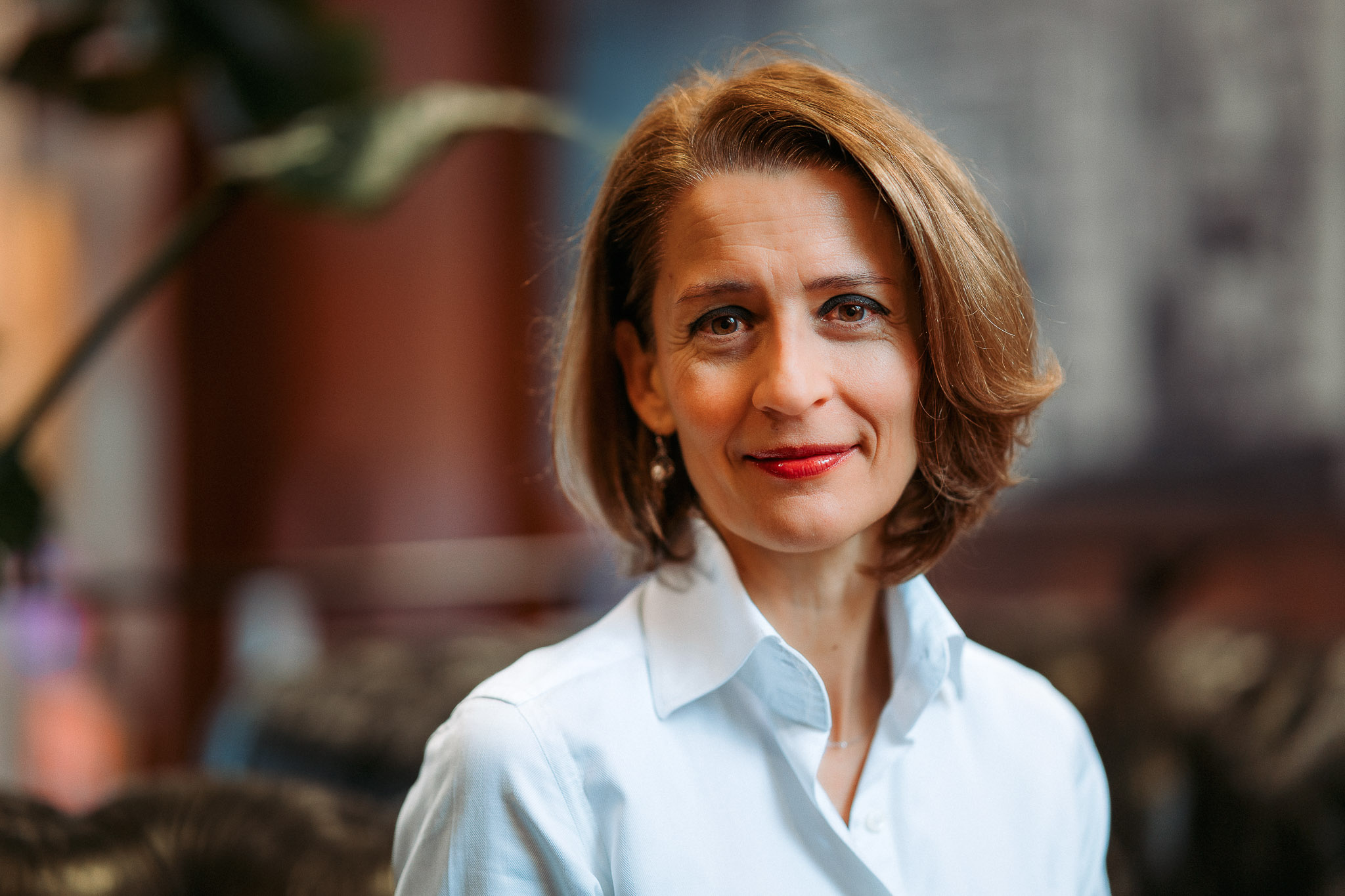
Tânia Ganho © Luís Carvalhal
In February 2026, Portuguese literary translator Tânia Ganho was selected as the fifth annual Literature Ireland/UCC Translator in Residence at the School of Languages, Literatures and Cultures, University College Cork. Tânia was resident in Cork City for a period of three months, during which she worked on a translation of Land by Maggie O'Farrell. She also gave translation workshops in the Translation Studies department at UCC and participated in a number of events in both Dublin and Cork, one of which was hosted at the Trinity Centre for Literary and Cultural Translation, home of Literature Ireland.
Speaking over email recently, Tânia was kind enough to fill us in on the details of her residency, telling us about her experience of Cork, cultural life on the UCC campus and the effects of the residency of her translation of Land.
"From February to April 2026, I was the Literary Translator in Residence at University College Cork – a wonderful and enriching experience. I lived and worked in a lovely, quiet flat at Nano Nagle Place, a true oasis in the centre of Cork within walking distance of UCC, where I had an office to work in and spend time with my colleagues from the Spanish and Portuguese Department. These three months in Cork allowed me to devote myself entirely to translating Maggie O’Farrell’s Land, which hadn’t come out yet in English and was published in the UK and Portugal almost simultaneously. It was an absolute privilege to work on Land in Ireland and to be able to travel and immerse myself in Irish culture and history, which was crucial to my understanding of O’Farrell’s novel.
During my stay, I participated in several events that deepened my sense of being part of a dynamic multilingual literary community: I gave a presentation to a delegation from CNIPES (Conselho Nacional para a Inovação Pedagógica no Ensino Superior / National Council for Innovation in Learning and Teaching in Higher Education); I gave a public talk at UCC about my work and career; I led a workshop on translation at UCC; I participated in two UCC Book Club events, in which I discussed my career as both a translator and a novelist; I took part in a talk with Billy O’Callaghan at the Cork World Book Fest, as well as a talk with academic and poet Martin Veiga and translator Laëtitia Saint-Loubert at Nano Nagle Place.
Thanks to Literature Ireland and the Portuguese Embassy in Dublin, I also participated in an event in Dublin with Naoise Dolan, in which we discussed Irish language and culture – a discussion that proved extremely helpful for my understanding of O’Farrell’s Land. Furthermore, I attended a lecture by my former university teacher and colleague, Portuguese scholar Carlos Reis, which strengthened my bonds with members of the Spanish and Portuguese Department at UCC, who have since become dear friends.
These three months were also the perfect opportunity to immerse myself in Cork’s vibrant cultural scene. I attended two plays at the Cork Arts Theatre and several events at the beautiful Triskel Arts Centre. I also joined several gatherings organized by a reading group, The Offline Circle, and went on walks and trips around the country organised by the Pop Science Café. I regularly visited the Boole Library and several Irish bookstores, where I spoke with librarians and booksellers. Thanks to all these conversations, I discovered Irish authors such as Doireann Ní Ghríofa, Naoise Dolan, Billy O’Callaghan, Róisín O’Donnell, Róisín Maguire, Cónal Creedon and Cathy Sweeney.
This residency in Cork was deeply enriching and gratifying to me, both as a writer and a translator. I have made long-lasting friendships in Cork and will definitely continue to explore Irish history and culture and promote Irish literature abroad."
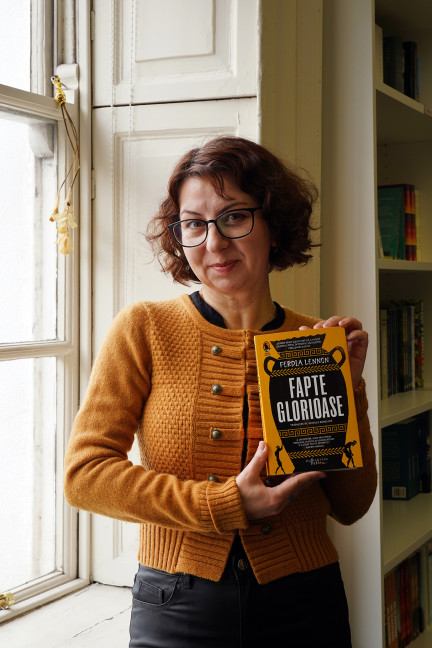
Mihaela Buruiană © Gaia Baldassarri
In November 2025, Literature Ireland hosted its final Translator in Residence of the year in collaboration with Trinity Centre for Literary and Cultural Translation: Romanian translator, Mihaela Buruiană. Visiting Dublin for the first time, Mihaela spent two months carrying out research and working on her translation of The Heart in Winter by Kevin Barry. During her stay, Mihaela connected with several of the authors she has translated and participated in a Dublin Book Festival event at Books Upstairs with Kevin Barry and Sinéad Mac Aodha, Director of Literature Ireland.
We asked Mihaela a few questions regarding her experience and time spent in Ireland.
1. What were some of the highlights of your residency in Dublin?
It was amazing to live in Ireland for two months and see, hear and breathe Irishness everywhere. Although I was based in Dublin, I got to travel around a bit – to Howth, Bray, and Malahide – and also further away – to Kilkenny, Cork, Galway, the Cliffs of Moher, Sligo, even Belfast and the Giant’s Causeway.
It was such a privilege to be able to live on the Trinity College campus. It was both convenient to be in the city centre and lovely to wake up and go back to that stunning view everyday.
Everyone at Literature Ireland and the Trinity Centre for Literary and Cultural Translation was incredible. They not only provided me with all the help I needed, from practical information to books (thank you, Elizabeth, Lynsey, Eithne), but they went above and beyond. I was invited to the Dublin Book Festival and had an event with Kevin Barry (thank you, Sinéad Mac Aodha), and got to speak to some of the Centre students about being a translator (thank you, Natalia Resende). I also met two other Irish writers I translated: Naoise Dolan and Ferdia Lennon, both of whom were very nice and friendly.
Trinity and Dublin have so much to offer in terms of activities that hardly a day went by without me trying something new: from museums and exhibitions, to choir practice and public speaking classes; from walking around the city parks and bustling streets, to exploring the packed shelves of the library; from going to plays and musicals, to discovering Irish traditional music in local pubs.
The entire experience has been both professionally enriching and personally unforgettable, and I am incredibly grateful for this opportunity. Thank you once again for making it possible.
2. What was your experience of meeting Kevin Barry in person, and how did you find the experience of doing the event at Books Upstairs?
I was nervous, not only because I was meeting this great writer for the first time, but also because I was discussing his work in English in front of a room full of people. Fortunately, Kevin Barry was very nice and laid back, which helped me relax a bit. He’s such a natural storyteller (like most Irish people, I think) that I kind of slipped into the mood myself. It all turned out well, also thanks to Sinéad Mac Aodha’s interesting questions and great moderation overall.
I was glad when the audience had translation-related questions, and I was pleasantly surprised when I found out there were Romanians and students there as well.
Last but not least, I couldn’t have wished for a better venue for this event, as Books Upstairs is a lovely bookstore, which I visited several times during my stay in Dublin and would like to visit again.
3. Did you discover any new Irish authors or new Irish books you’d like to bring to a Romanian audience?
I read lots of Irish books during my residency – some by authors I already knew and loved, like Colm Tóibín, others by writers I was only then discovering, like Hugo Hamilton, John McGahern, and Caragh Maxwell. I made a list with some names and titles and I guess we’ll see which ones I’ll manage to translate. This all depends, of course, on the Romanian publishers’ interest and editorial plans, but Irish literature is already very appreciated by Romanian readers, so fingers crossed!
4. Did you have any “lost in translation” moments in Dublin or elsewhere in Ireland?
I can’t remember anything specific, but when I encountered an accent that was quite strong, I would miss the odd word here and there.
I’d love to go back to the Cork area and to see Connemara and maybe immerse myself more in the local linguistic variations and way of life.
5. What is the biggest benefit of doing a translation residence in Ireland, would you say?
You get to know the people, the places, the history and geography, the stories first-hand. You get to hear the sweet Irish accents all day long. You get a better understanding of what you read and translate, because you recognise names, cities, regions, shops, brands, streets, etc. You no longer need to imagine the world you read about – you’re actually there and can access it from memory later on. You fall in love with the Irish people’s niceness, friendliness, openness, humour, generosity, and pride in telling stories and in showing you their country. You fall in love with the scenery, the traditional music, the local beers. You even learn not to mind the weather. And you long for it, even long after you’ve left.
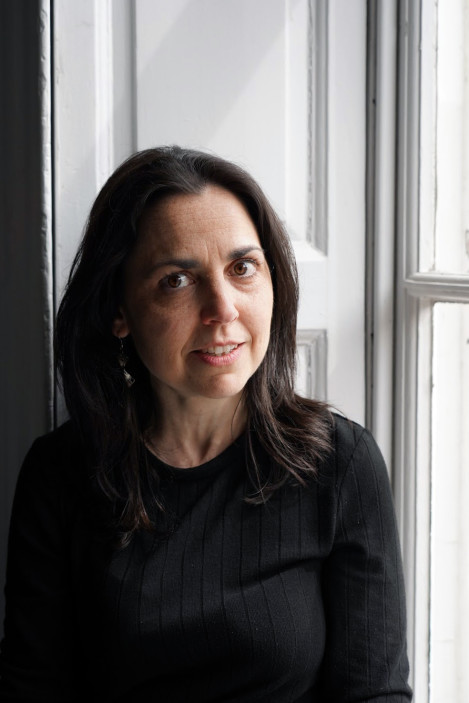
Diana Luque © Gaia Baldassarri
In June 2025, Literature Ireland welcomed Spanish translator Diana Luque for a three week residency in Dublin. During her time here, Diana was able to see productions of original plays she has translated throughout her career, and was actively searching for new Irish playwrights to propose for translation.
We asked Diana a few questions regarding her experience and time spent in Ireland. Here is what she had to say.
1. Do you think spending time in Ireland changed how you read or approach Irish drama /
plays?
Having the chance to be immersed in Irish culture and daily life is very important when you are a translator. You need cultural contextualisation. You master a language when you are able to appreciate the particular use that native speakers make of it. Also, my trip to Connemara changed my perception of the area. Discovering that it is much rockier than I imagined, which makes it difficult to graze livestock or cultivate, gave me a better understanding of the socioeconomic background of this region. All these aspects are crucial when you are translating, and particularly relevant when you translate theatre, because the cultural and socioeconomic context of the characters needs to be well portrayed so that it can later be reproduced/reinterpreted on stage.
2. You visited several theaters and saw a number of plays in Dublin during your stay. Can you tell us more about this?
It was a privilege to be able to go to the theatre in Dublin. I’m a translator and a playwright, so for me, it’s essential to familiarise myself with the theatre of the country: directing and staging trends, themes and writing styles, actors, and so on. I saw Friel’s Dancing at Lughnasa, directed by Carolyne Byrne at 3Olympia Theatre. It’s one of the first Irish plays I read – many, many years ago – and I enjoyed this production very much. I also saw Static, by Jimmy McAleavey, at the Peacock Stage and the Gate Theatre’s production of The Pillowman. I translated McDonagh’s play in 2022. I saw a Spanish production directed by Denis Rafter – an Irish actor and director long residing in Spain – many years ago, but never had the chance to hear the text in English, the original language. Listening to the inflection and sonority of the sentences, being able to perceive different accents… It was an absolute joy.
The tour of the Abbey Theatre was amazing. I’m now aware of what this theatre meant for the independence of the nation and how important it is for Irish society. It is a fascinating example of the socio-political power of theatre.
3. Did you discover any new Irish playwrights or new Irish plays you’d like to bring to a Spanish audience?
I read as much as I could during my residency, up to twenty-six plays by contemporary Irish playwrights and three manuscripts of Marina Carr’s first plays from the National Library of Ireland. I made some amazing discoveries: playwrights I didn’t know about and also new plays by authors I knew, but I didn’t have access to. I took lots of notes, and I have a long list of plays, playwrights and companies I will be consulting over the next months.
Literature Ireland also introduced me to Niamh O’Donnell, the Director of The Irish Theatre Institute, and facilitated my trip to University of Galway to meet Professors Patrick Lonergan and Barry Houlihan, and consult the University of Galway Theatre Archive. These meetings were crucial. We had interesting talks about Irish theatre, which expanded my understanding. I also spent some days with Marina Carr in Clifden and even attended one of her classes. In this regard, this translation residence in Dublin was a turning point.
4. Could you share your perception of the Irish drama and theatre scene, and perhaps compare it to the types of dramas typically produced or staged in Spain?
I think we have in common a respect and care for our classics and an interest in a more experimental theatre – some hybrid forms mixing performance, dance, digital technology, etc.
I love the fact that the Celtic culture expanded in Ireland and in the north of Spain. Both folklores have common elements; their legends share themes and have similar characters. You could find correspondences for the settings of some rural Irish plays in those Spanish regions.
Our theatres are also historically intertwined. Juan Ramón Jiménez and Zenobia Camprubí translated and published Riders to the Sea, a play that influenced Lorca’s Blood Wedding enormously. Lorca also wanted to translate and perform The Playboy of the Western World for his company La Barraca, but he was murdered before he could do so. Spanish playwright Jacinto Benavente had some works produced at the Abbey Theatre in the twenties. The influence of Samuel Beckett and Brian Friel in Spain is remarkable. Martin McDonagh is a well-known playwright and film director, and Marina Carr is beginning to make her mark in theatre and academic circles. Thankfully, there is this common background, and I hope there is also a growing interest in the translation of new Irish works.
5. What is the greatest benefit of doing a translation residence in Ireland, would you say?
My residence in Ireland was an invaluable experience in many ways. As stated above, having the chance to immerse myself in the culture of the language I translate is indispensable. Going to the theatre, visiting museums, meeting professionals and scholars that shared their knowledge and experience with me and pointed out interesting works was crucial. Also, the opportunity to travel from the East to the West and get to know several areas of the country. Spending three weeks investigating and reading Irish plays was a delight. I’m very grateful to the Literature Ireland team for their warm welcome and care, and for their support for so many years now. As I said before, this experience has been a turning point and a dream-like opportunity. I’m very thankful for this.
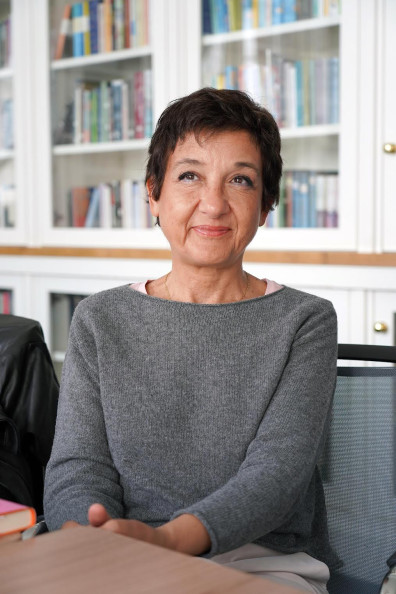
Giovanna Granato © Gaia Baldassarri
In May 2024, Literature Ireland welcomed Italian translator Giovanna Granato for a three-week residency in Dublin. During her time here, Giovanna was working on the very last translation stage of Colm Tóibín's Long Island (Giulio Einaudi editore, 2025). A highlight of her stay was a visit to Enniscorthy in County Wexford where a great part of the novel is set. She recently shared a few words about this experience.
"I’ve just read A Guest at the Feast by Colm Tóibín. Before I translate a text I always read it, to get its flavour. And this one tastes strange, it tastes good. It tastes like a dream come true.
The book is mostly about Enniscorthy, the Irish town where Tóibín was born - the Enniscorthy of the past and the present, the Enniscorthy of memory and reality, the Enniscorthy of Colm Tóibín, the Enniscorthy I revisit through his eyes and which has also become a little bit mine.
That’s because I’ve actually been to Enniscorthy several times. All in my imagination, except for one time.
Years ago, I fictionally went there while reading Brooklyn and later when devouring Nora Webster. So when I returned there, still in my imagination, for a long period while translating Long Island, I was somewhat familiar with it. Although this time, instead of just envisioning it, as one does when reading, I had to reconstruct it, as one does when translating. So I created a mental map of the square where Jim’s pub and Nancy’s chipper are located, of the street where Eilis’s mother lives, the streets Eilis walks along when she returns from Long Island. It was a fairly accurate map, because Tóibín is good at describing places in general and those close to his heart in particular.
When I finished translating Long Island, I felt I knew it well, Enniscorthy, as if during those months I had lived there for real. Actually, not for real, for its contours remained as those of a dream.
Then the dream came true.
Around this time last year, the highly esteemed organisation Literature Ireland, whom I will never be able to praise and thank enough, invited me to spend the month of May in Dublin to allow me to finish translating Long Island and visit Enniscorthy. It wasn’t the first time I met Literature Ireland; they had previously invited me in 2015 when I was translating Edna O’Brien’s The Object of Love, a memorable experience that would require a long chapter of its own.
It was May 10th, 2014, a Friday, when from Pearse Street train station – just outside Trinity College campus, where my accommodation was – I took the train to Enniscorthy. I have a clear memory of it. In those days, I kept a diary which I wrote in nearly every afternoon around 6pm after the day's adventures, while I treated myself to an Irish coffee in one of the local pubs. The journey from Dublin is disproportionately long for a route that I believe is no more than a hundred kilometres, but the view from the window was so beautiful that I couldn’t take my eyes away. Sea as far as the eye can see for the first two-thirds of the route, then the countryside, so green that it took my breath away, even though I live in Umbria and see a lot of green.
The first thing I did when I arrived in Enniscorthy was to photograph the map of the town posted at the station exit. I hate photographing the places I visit; I prefer to imprint them first in my eyes and then in my memory, but this time I couldn’t help myself: in front of me my dream was becoming reality, the mental map traced on paper. In colour.
Then, a few steps down the road, is the bridge over the River Slaney, which is the gateway to the town, the castle standing out in the distance, the first low houses, the inevitable pubs and the uphill road with the sign Inis Córthhaidh, the Irish name for the town, and lots of colourful umbrellas suspended in mid-air. The dream became clearer and clearer. Main Street, where in Long Island Jack and Pat, Eilis’s brothers, stay when they come to Enniscorthy for their mother's 80th birthday, and then Church Street, Slaney Street, Rafter Street, up to Parnell Avenue, where I knew there would no longer be the phone box that Eilis uses in the novel to call Jim, even though I hoped to find it anyway. Everything was right there in front of my eyes and under my feet. I felt like a child on a merry-go-round. It was one of the best moments of my life as a translator.
And now, reading A Guest at the Feast and preparing to translate it, my mind returns to those places that are no longer a fantasy, that are more than a fantasy. I have seen them, I know them. They are a dream come true. And now they have the contours of magic."
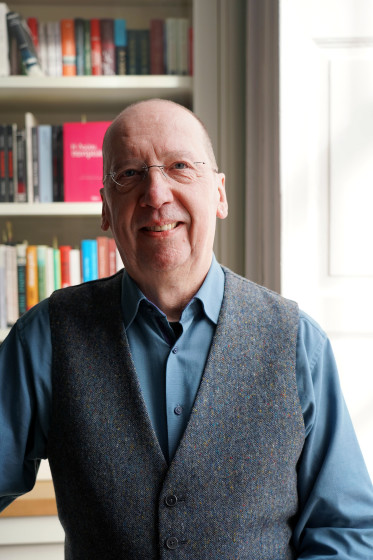
Peter Torberg © Gaia Baldassarri
In April the Literature Ireland team welcomed the German literary translator Peter Torberg, who visited Ireland for the first time. Peter spent four weeks with us in Dublin, in accommodation in Trinity College Dublin. He spent his time in Ireland book-scouting, looking for untranslated Irish literary works to propose to German publishers in translation. Peter was also one of the readers during the launch of poet Gerald Dawe's Versions, launched in collaboration with the Trinity Centre for Literary and Cultural Translation.
We asked Peter Torberg a few questions regarding his experience and time spent in Ireland.
What, in your opinion, are the advantages of a translator living or spending time in Ireland whilst translating the work of an Irish author?
It is always, always very helpful for me to have the “sound” of the translated language in my ears. This way, it is as if I have the text and the characters of the novel talking in person. When you immerse yourself in the “scene”, you will always end up with a more flavourful, and hopefully true, output. An unachievable, yet desirable goal.
Considering how difficult it can be to understand tone in literary text, how would it help you as a translator to hear the words and phrases you will be reading on a page, spoken in the accent and delivery intended by the author?
For me personally it is very helpful to have heard the voice of the authors, and even to know some of the background noise of the surroundings. As you do not only translate words, but also put your sense of the text to the words, the factuality, and the more you know of context, regarding information about the author, or the setting, the better the outcome will be. Travel! Curiosity! Second names of every translator.
Before arriving in Dublin, what did you anticipate being the benefits of your stay?
Prior to my stay as a Translator in Residence with Literature Ireland, I had never been to Ireland before, so my expectations were very… fictive? Yet, after one month I came to the conclusion that Ireland, and the Trinity College campus in particular, was the best surrounding possible. Ireland is definitely NOT England… und das ist gut so.
Would you like to return to Ireland if you were to translate another Irish novel?
I would certainly love to apply for another stay in Ireland! And I would love to translate more books by Irish authors, surely!
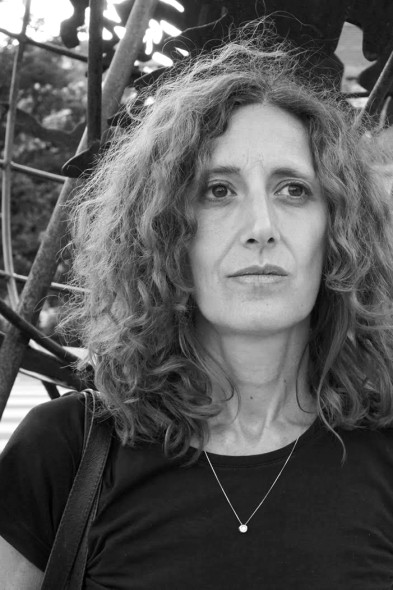
The University College Cork School of Languages, Literatures and Cultures, in partnership with Literature Ireland and Nano Nagle Place, hosted translator Elvira Grassi as the Literary Translator in Residence 2023-2024.
Elvira Grassi was born in Ancona, Italy, and works in Rome as a literary translator and editor. She holds a degree in Foreign Languages and Literatures and a specialisation in the Didactics of Italian as a Foreign Language from University for Foreigners of Siena. In 2005, she co-founded the editorial and literary agency Oblique Studio, based in Rome. She has translated over twenty works of fiction into Italian, including authors such as Anna Burns, Rónán Hession, Ian Williams, Angela Flournoy, Frances Greenslade and Sarah Shun-lien Bynum. She mainly translates for the Italian independent publisher, Keller Editore. During her residency at University College Cork, Elvira was working on a translation of Big Girl, Small Town by Michelle Gallen.
We asked Elvira Grassi a few questions regarding her experience and time spent in Ireland.
During your stay in Cork, did you manage to visit any rural Irish towns that reminded you of “Aghybogey” in Big Girl, Small Town?
There is no particular place that reminded me of Aghybogey. I think it is Ireland as a whole, with its small towns but also its cities, that permeates this fictional town.
The historical background is very strong and vivid, violence pervades the novel and seeps into everyday life – even though the Troubles are over, they continue to shadow the lives of its inhabitants – so it’s not easy to find a counterpart in the present. But of course, what makes Aghybogey and the small rural villages I’ve visited during my residency similar is the fact that everyone knows everyone else, everyone knows what everyone else is doing, everyone knows the habits and secrets of other families, everyone goes to the same places, the same pubs, shops, etc. But that is just the way it is. But that’s the way it is in small, provincial, gossipy communities all over the world. Of all the places I have visited, Derry is probably the place most akin to Aghybogey – and indeed the book has been compared to the amazing TV series Derry Girls – although Derry is now largely touristy. During my stay in Cork, I watched some films that were useful for my work, such as Baltimore (set during the Troubles) and That They May Face the Rising Sun (about a small lakeside community) – films that will probably not be released in Italy, or will be released later.
Gallen’s novel is largely set in a chip shop, so I spent a lot of time in local chip shops, studying the menus and the dynamics of the shop, listening to the formulas used to take orders and place orders, picking up spontaneous conversations, watching people eating and chatting and enjoying their food, etc. It was very helpful. In those moments, the colourful characters from Big Girl, Small Town suddenly appeared and I could see them talking to each other in their own language, in that vernacular which is the real strength and beauty of the book.
With Big Girl, Small Town and Milkman taking place just after and during the Troubles, has your time in Ireland deepened your insight into both novels?
Being in Ireland has certainly helped me to study the historical and political situation in Ireland in more depth. I had access to the Boole Library at UCC and the City Library, so I took the opportunity to read a lot of material focusing on the Troubles. There's also a large section on Irish history in every bookshop in the city, so I often browsed through essays and novels on Irish history. Being attuned to the author’s history, knowing where a project comes from, understanding its context, is essential to me. But what helped me the most was talking to the two writers, Michelle Gallen and Anna Burns, sharing thoughts with them, asking them questions about specific political and social situations, about places, and so on.
How would your stay in Ireland impact your approach if you were to translate another Irish novel?
Immersing myself in Irish culture will certainly have a huge impact on my approach to translating new Irish fiction. Living in a foreign country (that of the language you are translating from) for a period of time is fundamental, it helps you to understand better how people live and think, the Irish traditions, customs, practical things (such as objects, food, how public transport and all city services work). I spent a lot of time listening and observing people, watching everything with curiosity, in order to gather raw material for my creative process. I think this will be useful for any other book by an Irish author that I will translate in the future. Anyway, I am used to reading contemporary Irish fiction. I like it a lot, so I think I already have a good overview and knowledge of contemporary Irish literary writing.
How was your experience working with the students at UCC?
Working with the students of the MA in Translation Studies at UCC was a very interesting experience. What I tried to convey to the students was the importance of reading (classics, contemporary novels, poetry, essays, graphic novels, memoirs, newspapers, etc) in order to become a better, more adaptable translator. I truly believe that a translator is first and foremost a reader. I then gave them some advice on how to enter the publishing world, how to make a translation proposal, and I described my working method, telling them about the importance of reading the whole text before starting to work on it: the translation begins, at least in my case, when I read the whole book for the first time; I let myself be guided by the author’s voice, and I try to understand what he/she is doing on the page. It is at this stage that I make the fundamental choices, that I get the tone, the flavour, the sense, and I find my translation strategies.
The students seemed curious and receptive. At the same time, they seemed a little frightened by the effort and sacrifice required at the beginning. We also worked on some sections of Gallen’s novel, focusing on the linguistic challenges, brainstorming solutions to specific problems, stimulating their creativity, forcing their individual language, etc. The students attended the event that Michelle and I held at Nano Nagle Place and they asked questions, talked to the author. They seemed to enjoy it so much.
Did meeting authors Michelle Gallen and Rónán Hession provide any fresh insights from a literary or personal perspective?
One of the privileges of the residencies is that they allow for many meetings and connections. I have been able to meet many writers, translators from other languages, professors and artists of all kinds (directors, musicians, playwrights, etc.). The residencies are essential for this kind of exchange.
Meeting Michelle Gallen and Rónán Hession in person was an enriching experience. I met Michelle twice during my stay, once in Dublin (together with Anna Burns) and once in Cork for the Nano Nagle Place event. She felt very familiar to me and we talked as if we were old friends. She is very intelligent and witty, as is her writing. I admire her very much. Talking to her made me understand a lot more about the protagonist of the novel – Majella, an amazing character – than I would have understood on my own, so the discussion was definitely very helpful. She helped me to understand Majella in every aspect (her personality, her relationship with her body, the way she thinks and expresses herself), so it is easier for me now to find the right way to convey the tone and language. We also talked a lot about writing and translating, about our respective approaches to our work, about fiction in general.
I met Rónán Hession last year in Dublin (we had dinner together in a fantastic vegetarian restaurant in the city centre), and then I met him again this year in April at an event at the Cork World Book Fest. It was very nice to meet him in an official context, with an audience in front of us, and to talk about the way we work, our approach, our challenges and how we experience literature. I got confirmation of his kind and funny nature, and I understood better that his writing is as genuine and spontaneously ironic as he is. I’m hoping to translate his latest book, Ghost Mountain, which is probably even more beautiful and original than Leonard and Hungry Paul, which I translated last year.
Working on both Michelle’s and Rónán’s books was very exciting because I was dealing with two different kinds of humour. There’s a dark, bitter, irreverent humour in Michelle’s books, the kind of sharp humour you find in Northern Irish fiction (and the kind of humour I’m more familiar with), whereas there is more comedy in Hession’s books, a very quiet humour that implies joy. And meeting them in person confirmed this perception of mine, made me realise that I wasn’t wrong.
Finally, I would like to say that I have been very lucky that most of the writers I have worked with so far have been happy to be involved in the process, and I have loved having them involved. Quite often they not only answered questions, but also made observations and suggestions: in the case of Rónán, about translating the name Hungry Paul into Italian or leaving it untranslated.
Literature Ireland does an excellent and valuable job of promoting Irish writing around the world through residencies of this kind (but their activity is much more articulated), I wish all translators an enriching experience like mine, it is well worth it. So, many thanks to Sinéad Mac Aodha and her efficient staff.
Anna-Nina Kroll was Literature Ireland's second Translator in Residence for a new and important partnership with University College Cork.
Anna-Nina lived and worked on the beautiful UCC campus in Cork City, where immersed herself in Ireland’s rich literary and cultural life while translating Donal Ryan’s The Queen of Dirt Island into German. She has translated all of Donal Ryan's work to date, along with Milkman and No Bones by Anna Burns, Snowflake by Louise Nealon and 'Green, Mud, Gold', a short story by Sara Baume. For her translation of Milkman, she was awarded the Förderpreis zum Straelener Übersetzerpreis in 2021.
During her time at UCC, Anna-Nina offered literary translation workshops, lectures and more.